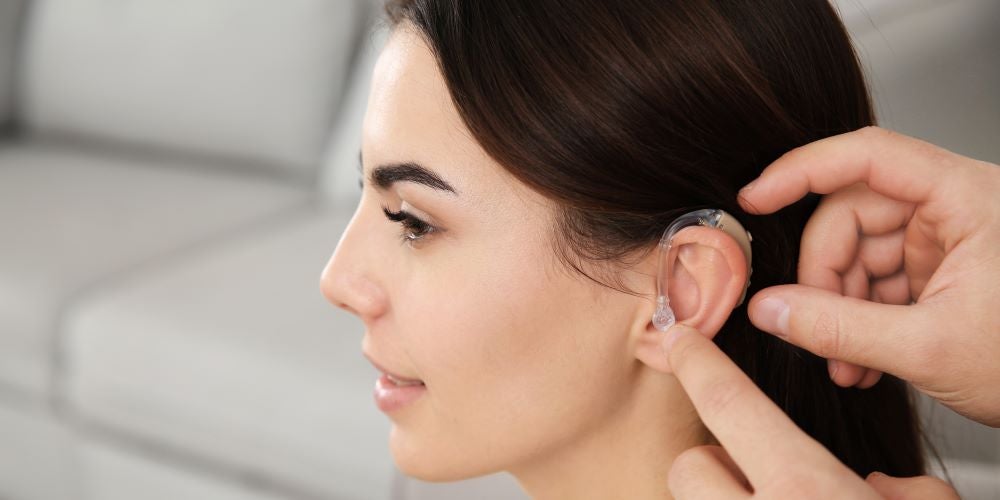
A person putting a hearing aid in a woman's ear

Hearing Loss Support

Over-the-counter (OTC) hearing aids offer treatment for patients with low to moderate hearing loss. It is a rapidly evolving segment aimed at improving accessibility and affordability.

Smart Hearing Aids with Enhanced Audio Processing

Hearing loss often goes untreated for years, leading to higher rates of psychosocial disorders like depression, anxiety, and dementia, as well as increased medical costs.

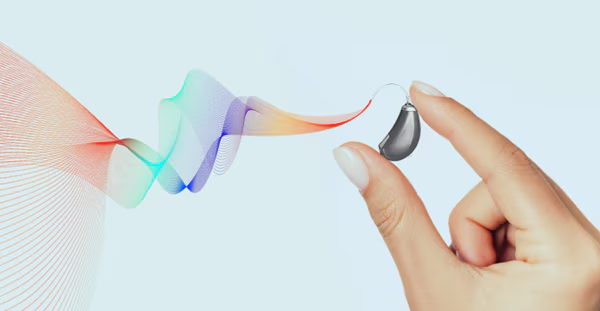
Modern hearing aids have evolved into sophisticated wearable systems that combine advanced signal processing, wireless connectivity and ultra-low-power semiconductor technologies to improve listening comfort. Over-the-counter (OTC) hearing aids have accelerated adoption by providing accessible solutions for individuals with mild to moderate hearing loss. The combination of miniaturized electronics, improved battery technology and intelligent software is enabling smaller, more capable devices that deliver higher audio quality while extending operating life.

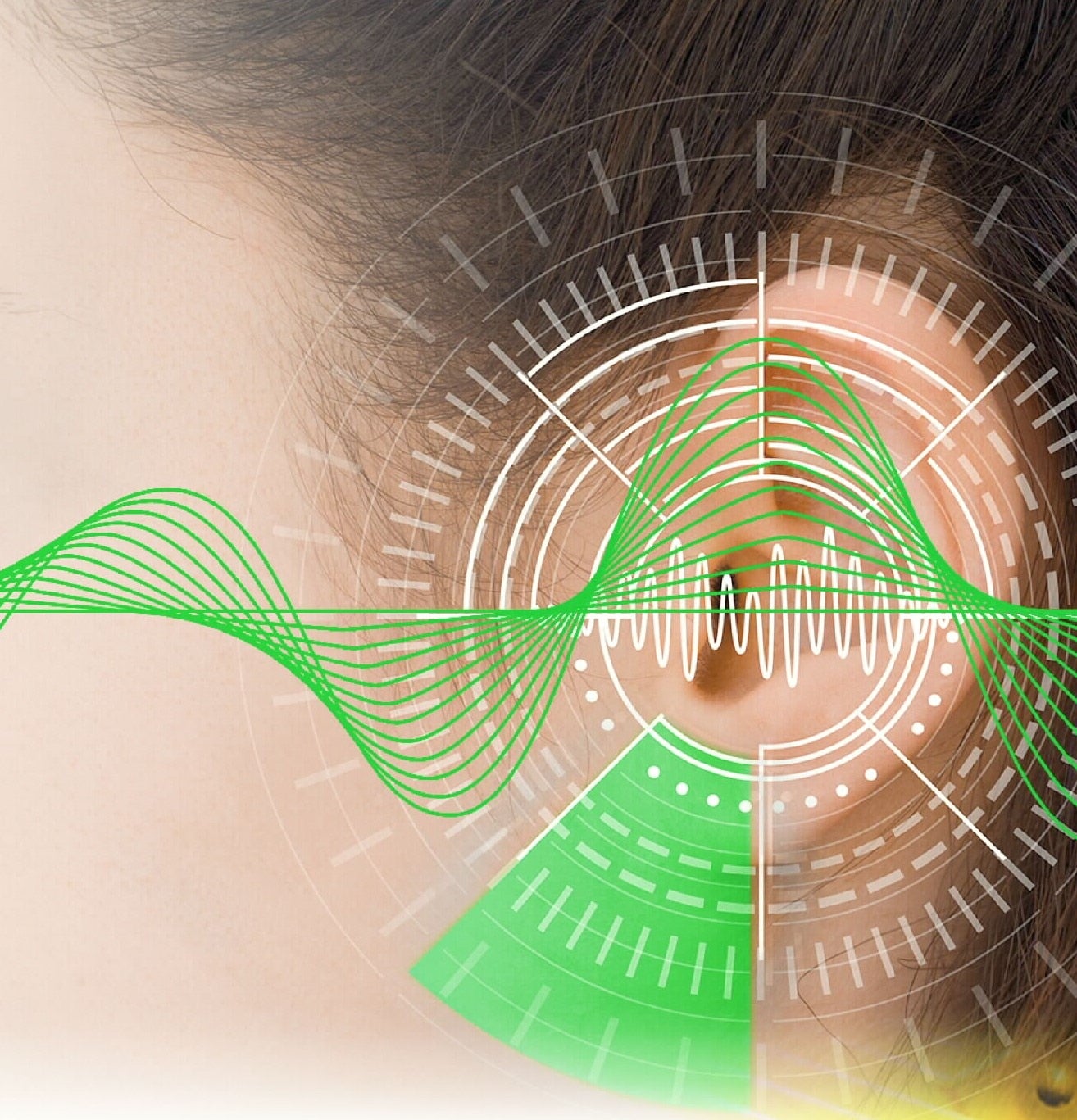
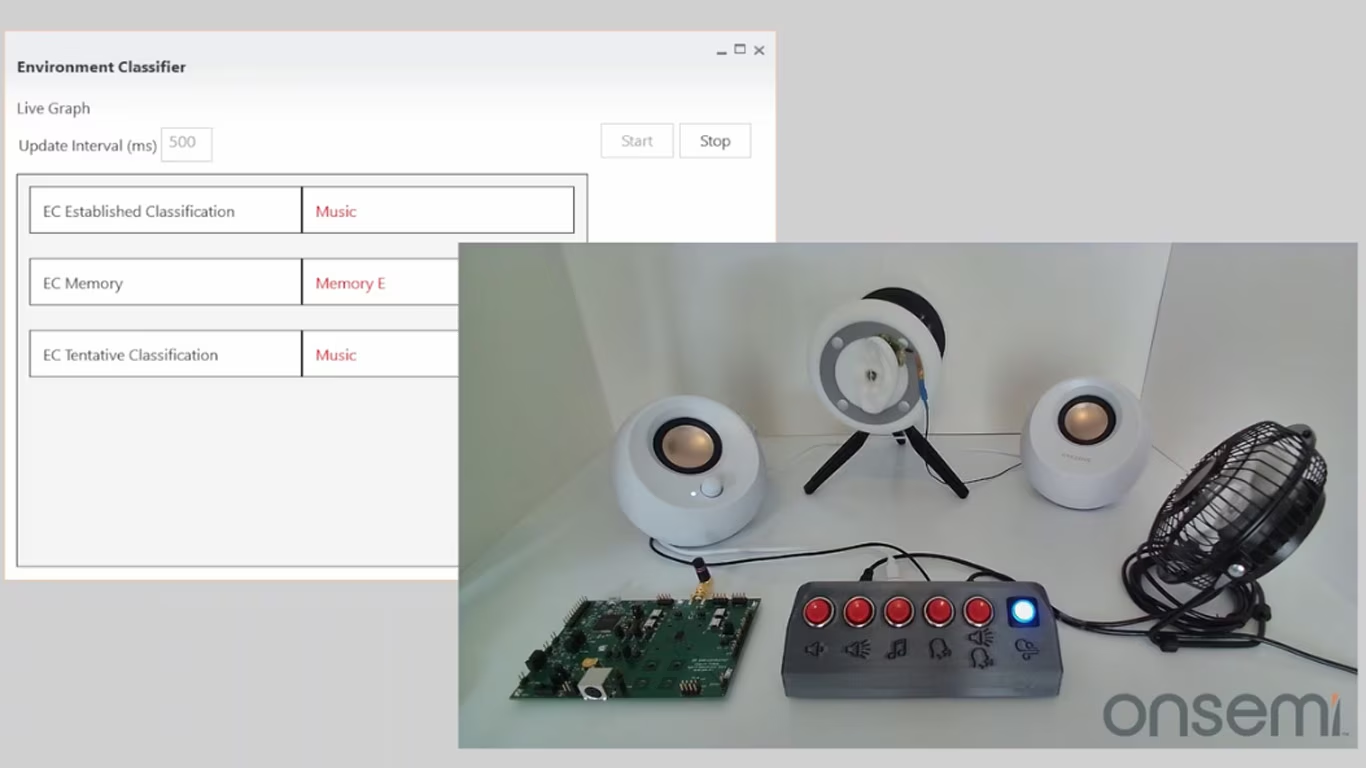
At the core of a modern hearing aid is the audiology digital signal processor (DSP), which performs noise reduction, feedback cancellation, speech enhancement and gain control. DSP bandwidth is a critical factor because it directly impacts the quality and naturalness of reproduced audio. Wireless connectivity has become a major design trend in next-generation hearing aids. Bluetooth® Low Energy (BLE) enables smartphone control, firmware updates, audio streaming and remote device management while minimizing power consumption. Emerging technologies such as Auracast™ and Bluetooth® LE Audio allow one-to-many audio broadcasting, enabling hearing aids to receive audio directly from televisions, public-address systems and assistive-listening infrastructure without individual pairing. Manufacturers are also increasingly incorporating AI-enhanced audio processing to improve speech extraction, environmental classification and listening comfort in noisy surroundings. 

Battery life remains one of the most important design considerations. Modern hearing aids increasingly utilize rechargeable lithium-ion or silver-zinc batteries. Semiconductor innovations focus on reducing energy consumption across the DSP, wireless connectivity and sensing functions, enabling smaller form factors without sacrificing performance.

Since hearing aids are medical devices, safety, reliability and regulatory compliance are essential. Hearing aid systems typically need to comply with standards such as IEC 60601 for medical electrical equipment, ISO 14971 for medical-device risk management and IEC 62304 for medical-device software lifecycle processes. Wireless implementations must comply with Bluetooth and regional radio regulations. As hearing aids become increasingly connected, cybersecurity and data privacy requirements are also gaining importance.
Block Diagrams

Products

Battery Charge Controllers
HPM10
Power Management IC (PMIC) for Hearing Aids
Bluetooth Low Energy
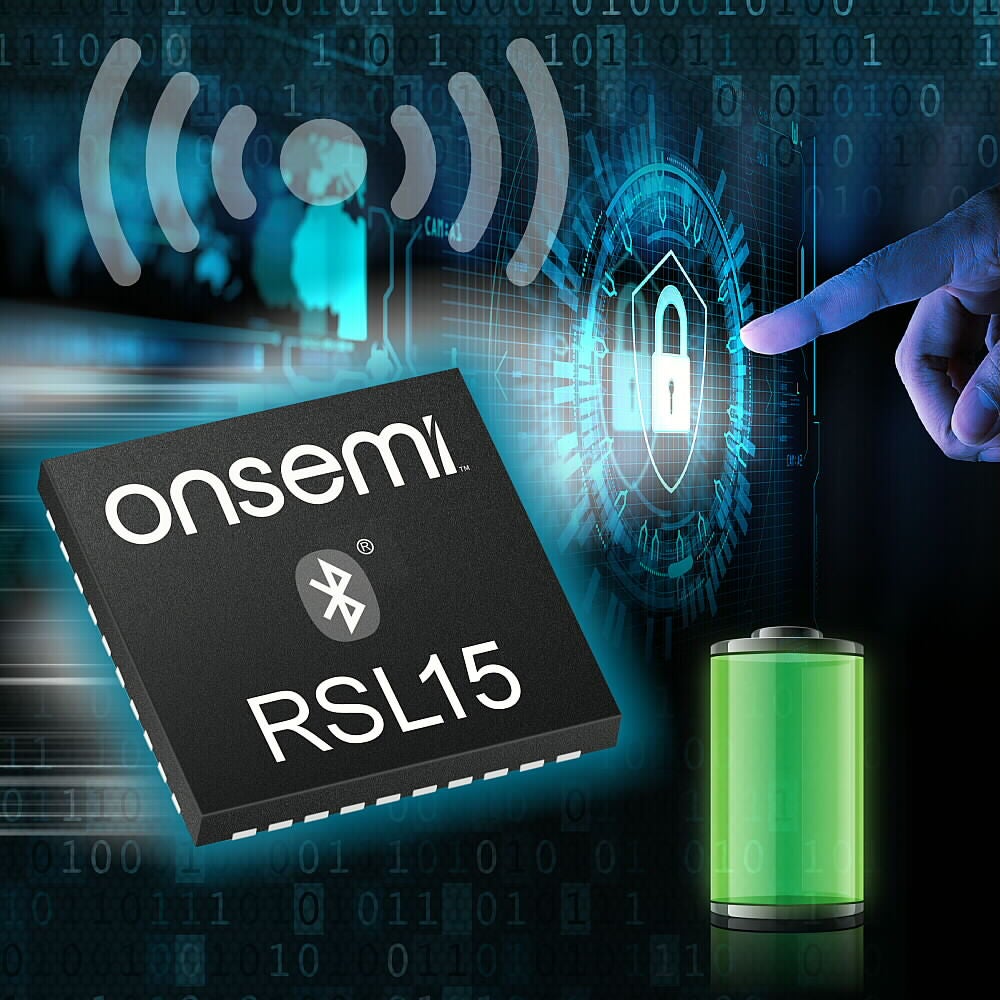
RSL15
Bluetooth® 5.2 Secure Wireless MCU
Audiology DSP Systems
Complete range of audiology Digital Signal Processor (DSP) systems for hearing aids.
EEPROM Memory
Serial EEPROM memory, with I2C, SPI, or MicroWire interfaces

Documents

Design Notes
Launching Arm Cortex-M3 Debug Sessions with Ezairo 8300 Evaluation and Development Boards
Application Notes
EZAIRO® 7111 Firmware Bundle V1 Technical Overview
Eval Board: Manual
Ezairo® 8310 Hardware Evaluation Board User's Manual
Application Notes
HPM10 Getting Started Guide
Reference Manuals
RSL15 Getting Started Guide
Reference Manuals
RSL15 Developer's Guide

Evaluation Boards/Kits

Evaluation Kit
HPM10-002-GEVK
Evaluation Board
RSL15-EVB
Evaluation Board
E8300-001-GEVB
Evaluation Board
E8310-001GEVB
Evaluation Board
E7160SL-002GEVB
Evaluation Board
E7111-001GEVB

Design Resources

Tools and resources for your evaluation process.

Find the Right Product

Utilize our PRT+ tool to identify the ideal product for you.

System Solution Guides

Explore tailored components and insights for your application.

Evaluation Boards & Kits

Buy and validate the performance of chosen components.

FAQs

The audiology DSP performs noise reduction, feedback cancellation, gain control and speech enhancement. Its performance directly determines audio clarity and listening comfort.

Auracast™ is a Bluetooth® LE Audio technology that enables one-to-many audio broadcasting, allowing hearing aids to receive audio streams directly from public venues, televisions and other compatible sources.

Key challenges include minimizing power consumption, improving speech intelligibility, reducing background noise, maintaining compact size, extending battery life and ensuring user comfort.

AI is increasingly used for environmental classification, speech enhancement, adaptive noise reduction and improved listening comfort in complex acoustic environments.

BLE provides wireless control, audio streaming and smartphone connectivity while maintaining extremely low power consumption, helping maximize battery life.

Worth Your Time

Discover curated articles brimming with innovative insights and industry trends.

Related Videos

Let's keep going – watch these videos for deeper dives and fresh perspectives.

Find Support

Your support sources for product info, knowledge base and FAQ for fast solutions.

Icon for support at onsemi
Support Hub

Explore the various contact options at onsemi support. 

Contact sales at onsemi
Sales Team

Get help with product or design questions by sending us a message or finding Sales Contacts on our Sales Office page.

Icon for community forum at onsemi
Community

Collaborate with engineers, share ideas and access peer-to-peer solutions for your projects.

hearing aid