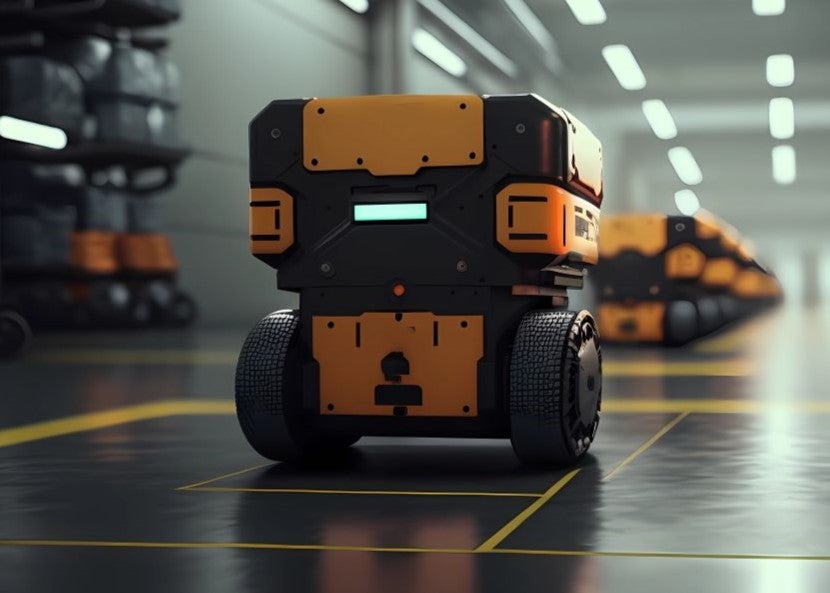
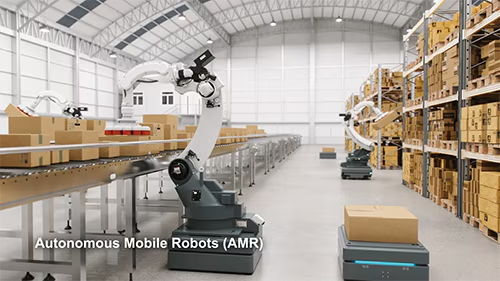
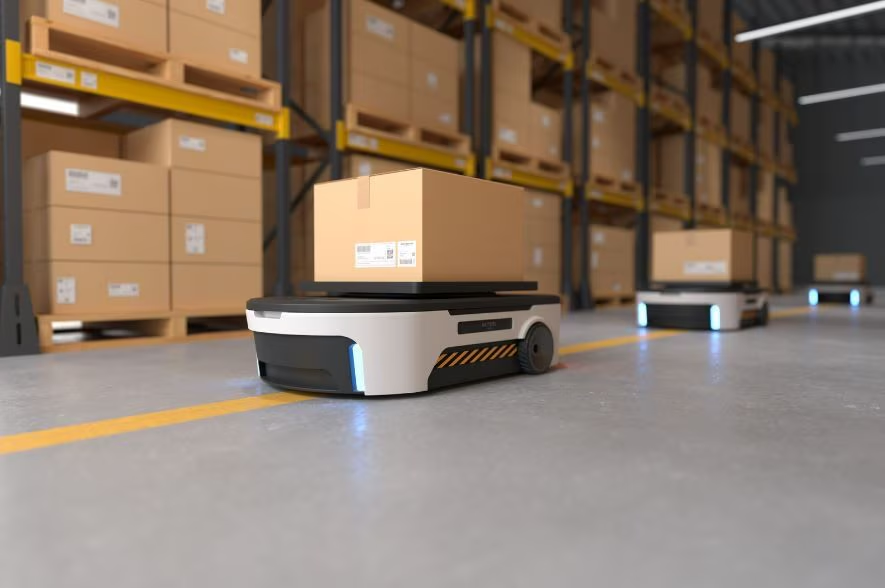
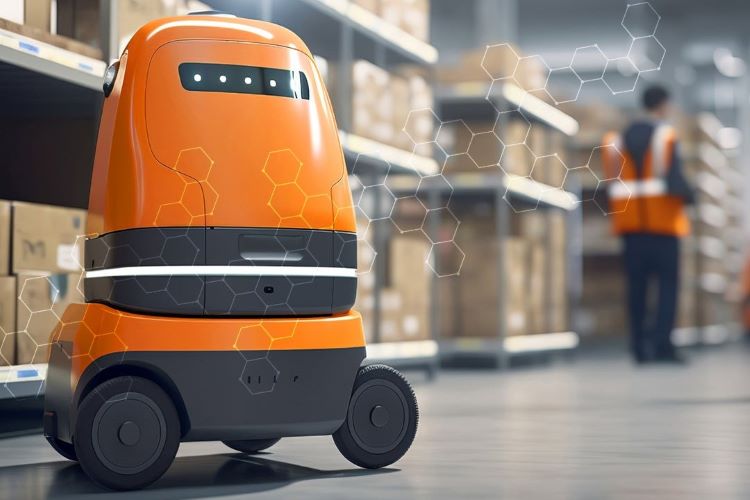
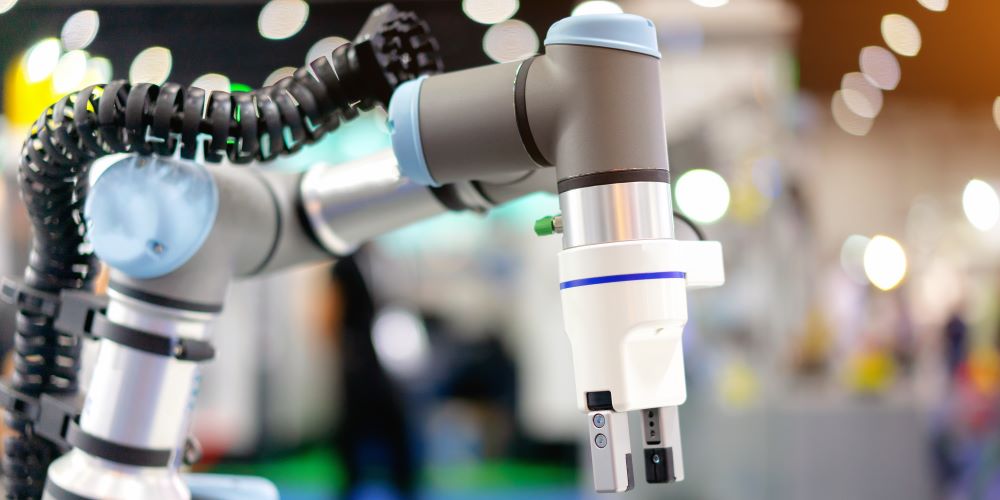
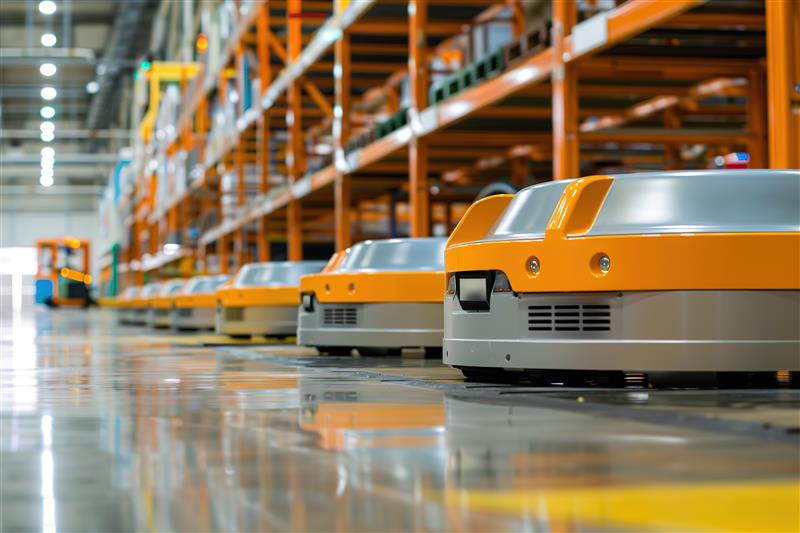
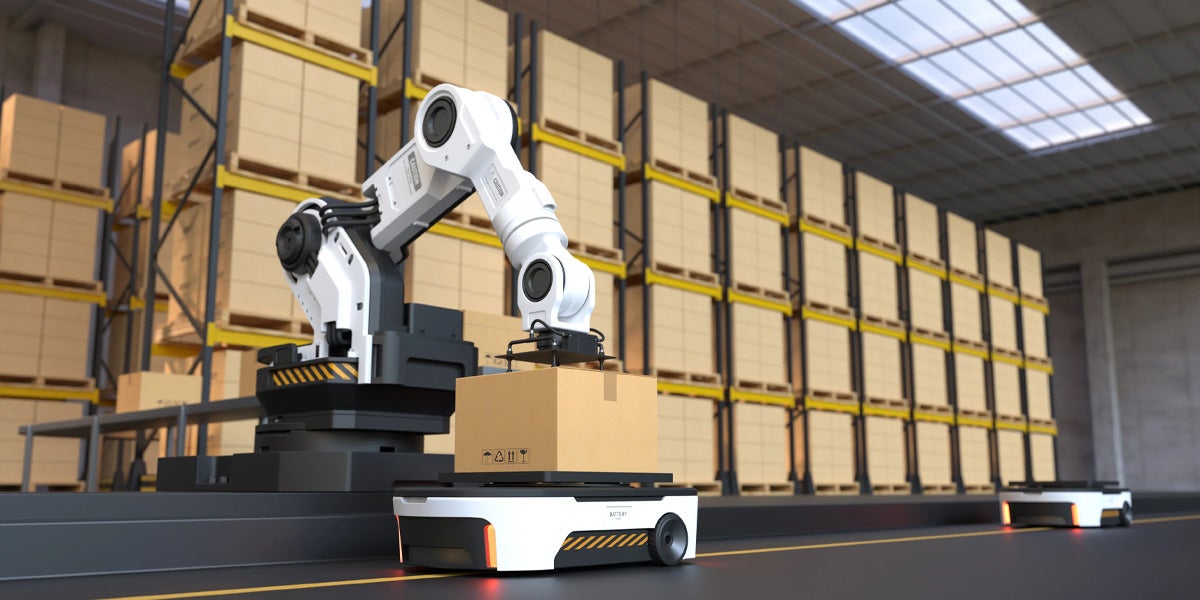
Smart robots are transforming industrial automation by combining mobility, perception, connectivity and artificial intelligence into autonomous systems capable of navigating dynamic environments and collaborating with humans. Applications range from autonomous mobile robots (AMRs) to robotic arms, delivery robots and advanced humanoid platforms. Unlike conventional industrial robots that operate in fixed, controlled environments, smart robots rely on sensor fusion, machine vision and AI-based decision-making to understand their surroundings, avoid obstacles and optimize navigation.
The heart of a smart robot is a combination of power electronics, motion control and embedded processing. Most mobile robots operate from 12 V to 48 V battery systems and require efficient power-conversion architectures consisting of battery-management systems, DC/DC converters and protection circuits. Motion is typically driven by brushless DC (BLDC) motors controlled through three-phase inverters using low- and medium-voltage MOSFETs, gate drivers and position sensors. Smart protection devices such as eFuses and protected MOSFETs safeguard critical power rails against overcurrent, overvoltage and thermal events, improving reliability and reducing downtime.
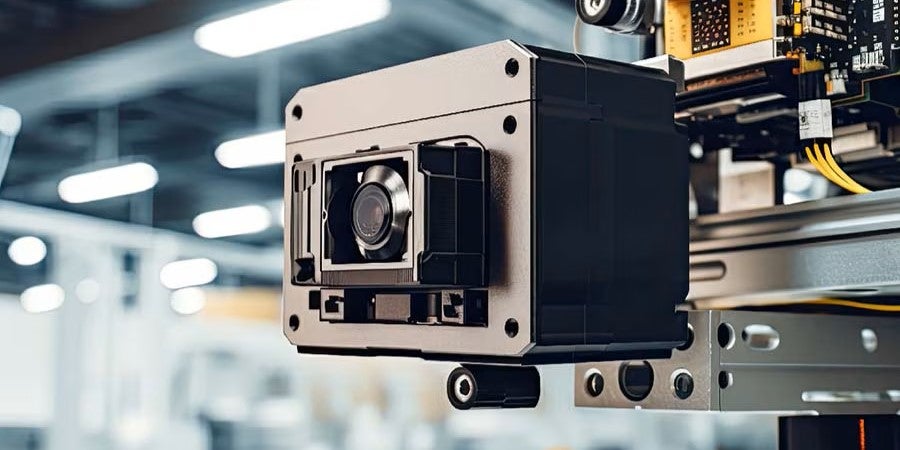
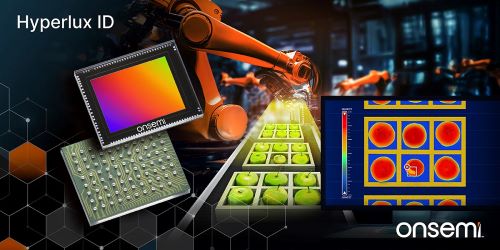
Autonomous operation depends heavily on advanced sensing and perception technologies. Modern platforms combine LiDAR, machine vision, depth sensing and other sensors to create an accurate understanding of the environment. Sensor fusion combines data from multiple sensing modalities to improve reliability, accuracy and functional safety. Simultaneous Localization and Mapping (SLAM) algorithms use these data streams to build maps, track obstacles and plan navigation paths in real time. Connectivity is also evolving, with 10BASE-T1S Industrial Ethernet and Bluetooth® increasingly replacing legacy communication methods.
AI is advancing robotics with enhanced object recognition, environmental classification, and adaptive decision-making. Improved computing, energy efficiency, and sensor integration enable robots to function in varied environments. Designers are optimizing battery efficiency, sensing accuracy, and system integration with intelligent modules and software. AI-driven robotics are transforming logistics, manufacturing, healthcare, and service industries.
Safety is a fundamental requirement for robots operating near people. Depending on the application, smart robotics systems commonly need to comply with standards such as ISO 10218 for industrial robots, ISO/TS 15066 for collaborative robots, IEC 61508 for functional safety, ISO 13849 for safety-related control systems and IEC 60204-1 for electrical equipment of machines. In addition, LiDAR and vision systems must incorporate eye-safety and fail-safe mechanisms to ensure safe operation in human-centric environments.