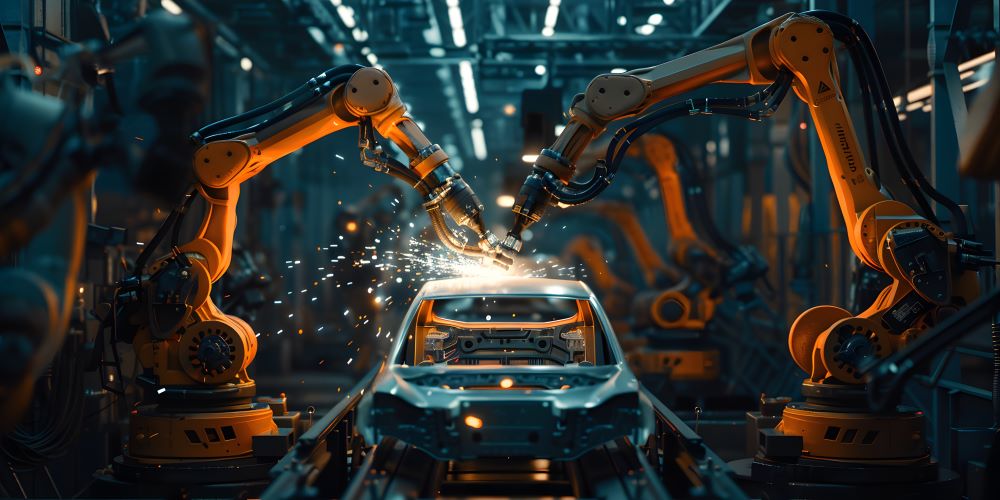
Welding equipment systems combine advanced power electronics, control systems, mechanical subsystems, and process monitoring technologies to deliver precise, repeatable, and high-quality welds. Welding equipment is used in applications ranging from automotive body assembly and shipbuilding to aerospace structures, pipelines, heavy machinery, and renewable energy installations. Modern welding solutions support a wide range of processes including arc welding, resistance welding, laser welding, and more, each optimized for specific materials and production requirements.
Industrial welding is governed by a set of standards that ensure weld quality, safety, reliability, and process consistency. Welding procedure standards, including ISO 15614 and ASME Section IX, define how welding procedures are developed, tested, and qualified before production use. Weld quality is evaluated according to standards such as ISO 5817. Each industry sector and welding type has their own standards imposing additional requirements, ensuring that welded structures meet stringent performance and safety requirements.
Today's welding equipment is largely based on high-frequency inverter technology, which has transformed traditional transformer-based welders into compact, lightweight, and energy-efficient systems. The inverter stage converts AC input power into regulated low-voltage, high-current output suitable for sustaining a stable welding arc. High-frequency switching allows the use of smaller magnetic components while improving dynamic control of welding current and voltage. Advanced digital controllers continuously monitor welding parameters to optimize arc stability, improve weld quality, and support automation and robotic welding platforms.
A key trend in industrial welding equipment is the adoption of advanced semiconductor technologies that increase efficiency, power density, and reliability. While IGBTs remain widely used for their robustness and high-current capability, SiC MOSFETs and SiC cascode JFETs are gaining traction. These wide-bandgap devices deliver lower switching losses, higher temperature operation, and faster switching speeds, enabling smaller passive components, reduced cooling requirements, and more compact welding systems. As a result, manufacturers can achieve higher efficiency without compromising arc performance or long-term reliability.
The welding equipment market is evolving toward greater automation, connectivity, and sustainability. Robotic welding cells, real-time process monitoring, predictive maintenance, and digital traceability are becoming standard in high-volume manufacturing. Although arc welding remains dominant due to its versatility and cost-effectiveness, laser, friction stir, hybrid, and battery-welding processes are expanding rapidly, particularly in EV and aerospace applications. To improve productivity, weld quality, and energy efficiency, modern welding systems increasingly integrate advanced power electronics, intelligent controls, and automation technologies to deliver scalable, future-ready solutions.