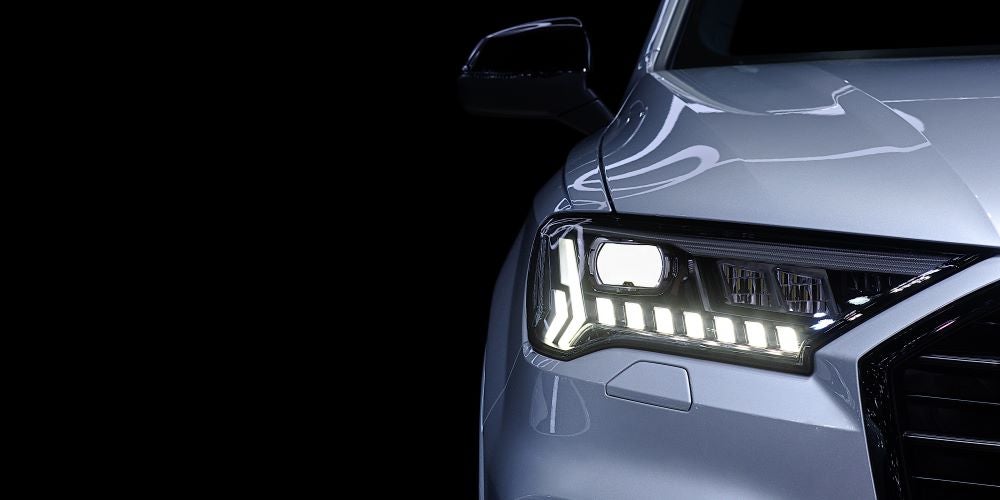
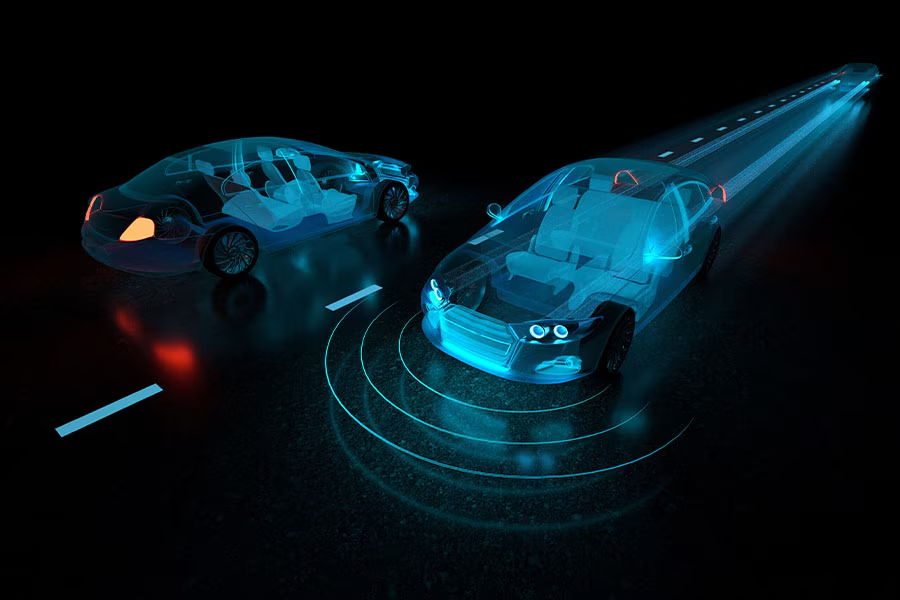
Automotive LED lighting has evolved from a styling feature into a critical safety and vehicle intelligence system. Modern front and rear lighting solutions work in conjunction with ADAS sensors and vehicle networks to improve nighttime visibility and increase road safety. LEDs have become the preferred automotive light source because they offer higher efficiency, lower power consumption and operational lifetimes exceeding 10,000 hours while enabling compact lamp designs and distinctive vehicle lighting signatures. Advanced applications now include adaptive driving beam (ADB), matrix headlights, dynamic turn indicators and animated rear lamps.
Since LEDs are current-driven devices, sophisticated LED drivers are required to precisely regulate LED current and ensure consistent brightness, high efficiency and long-term reliability. Modern front-lighting architectures typically employ a two-stage power topology, where a boost converter generates a stable 40 V to 60 V supply that feeds multiple synchronous buck LED drivers controlling individual LED strings. This architecture provides high efficiency, accurate current regulation and extensive diagnostic capabilities while simplifying EMC compliance. Integrated MOSFETs, current-sensing circuits, temperature compensation and high-frequency switching enable modern drivers to achieve efficiencies above 95%.
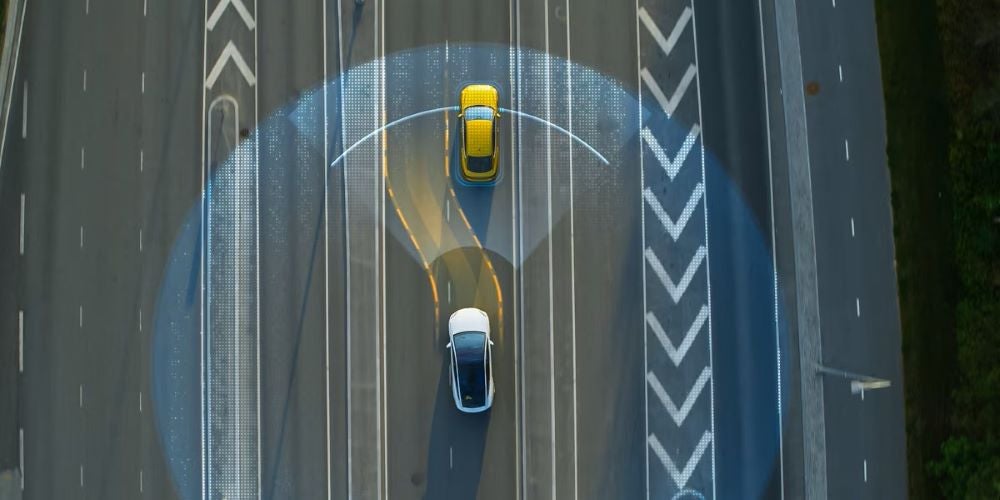
One of the most significant trends in automotive lighting is the transition to adaptive and pixel-based architectures. Adaptive Driving Beam (ADB) systems divide the light output into individually controlled segments, allowing the vehicle to dynamically create shadow areas around other road users while maintaining maximum road illumination. High-resolution systems can contain thousands of controllable pixels per lamp, enabling advanced functions such as projection lighting. The devices continuously receive camera and vehicle data to adjust light distribution in real time.
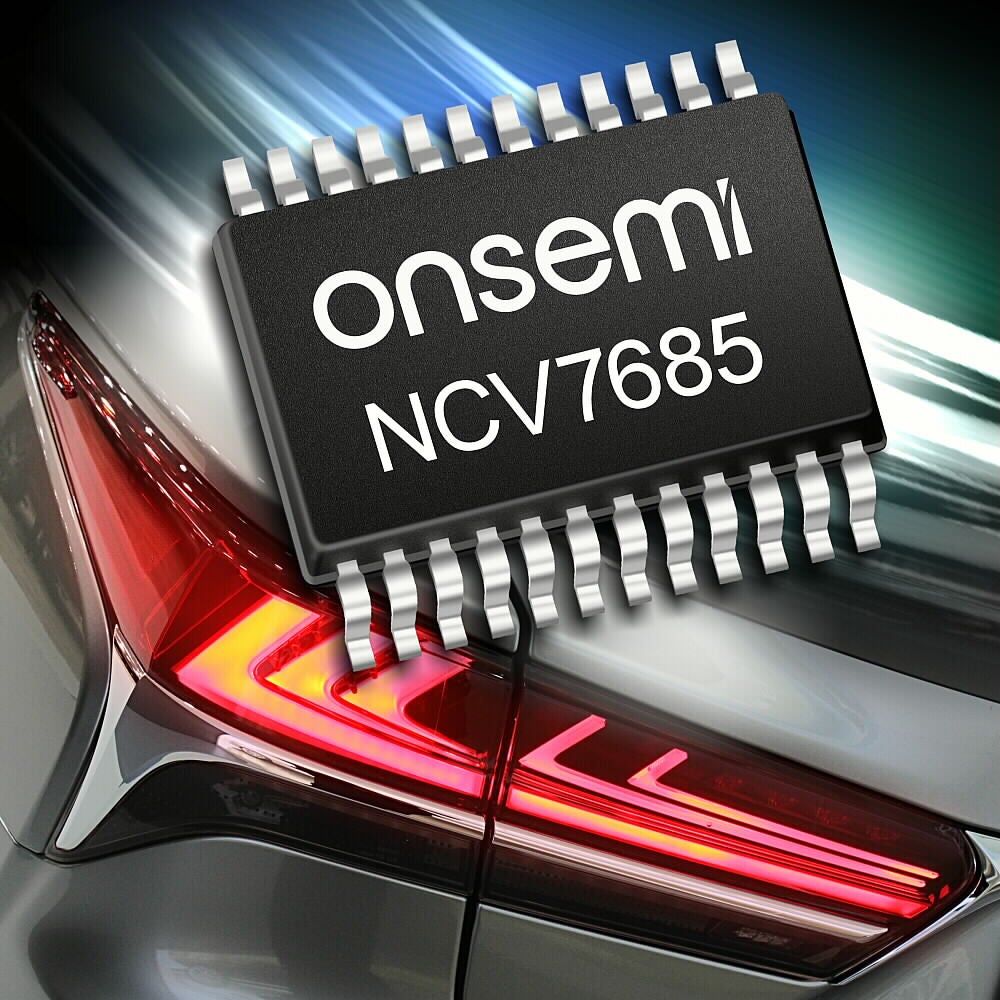
Rear lighting systems are following a similar evolution. Multi-channel linear LED drivers and intelligent controllers enable dynamic brake lights, sequential turn indicators and adaptive rear-lighting systems that adjust visibility according to driving conditions. Designers increasingly combine efficient power conversion, advanced diagnostics and communication interfaces with thermal management techniques to maximize system reliability.
Automotive LED lighting systems must comply with stringent safety, reliability and regulatory requirements. Front and rear lamps are commonly designed to meet lighting regulations such as UNECE R48 and FMVSS 108, which govern beam patterns, brightness levels and vehicle signaling functions. They must also satisfy automotive EMC and ESD requirements to ensure reliable operation. Functional safety is increasingly important, with modern LED driver and pixel controller devices incorporating ASIL B functionality aligned with ISO 26262. Additionally, automotive-grade components require AEC-Q100 qualification, while emerging 48 V architectures introduce compliance requirements such as ISO 21780. Together, these standards help ensure that advanced LED lighting systems deliver reliable performance, functional safety and regulatory compliance.