As the artificial intelligence boom drives a surge in global electricity demand, semiconductor makers are facing a new reality. In an industry long viewed as energy-intensive, efficiency is no longer just a reputational issue but a competitive differentiator.
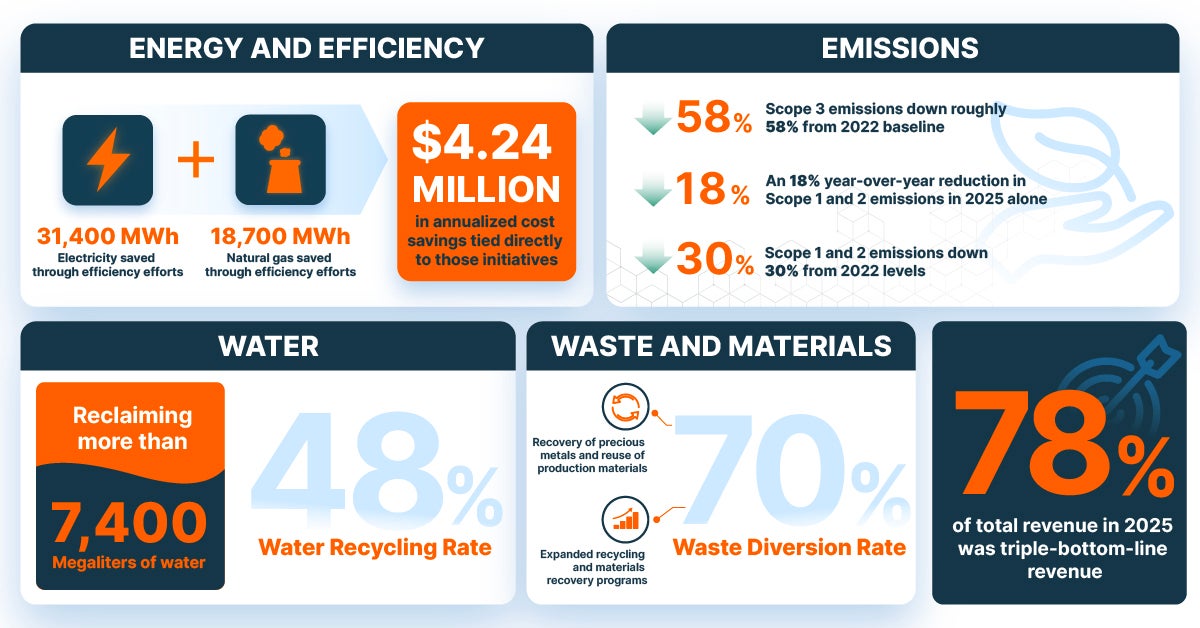
onsemi is embracing that shift as part of its growth story. The Arizona-based chipmaker reported that 78%, or $4.68 billion, of its total $5.99 billion revenue in 2025 came from products tied to what it calls a “triple-bottom-line,” or technologies that deliver returns not only for shareholders, but also for positive environmental and societal outcomes.
The figure reflects how demand from electric vehicles, renewable energy systems and AI infrastructure is reshaping parts of the semiconductor market.
“Sustainability in semiconductor manufacturing ultimately comes down to how efficiently you use energy, water and materials at scale,” said Kim Luu, Vice President of Sustainability at onsemi. “What we’re seeing is that the same investments that reduce environmental impact are also improving operational performance across our global footprint.”
Efficiency as Growth Strategy
For onsemi, the strategy hinges on a simple idea: the more power the world consumes, the more valuable efficiency becomes.
The company’s chips sit in systems responsible for moving electricity, from grid infrastructure to data centers to electric drivetrains, where even incremental gains in efficiency can translate into meaningful energy savings.
That same focus on efficiency is also showing up inside onsemi’s own operations. In 2025, the company reported 31,400 MWh of electricity and 18,700 MWh of natural gas saved through efficiency efforts, along with $4.24 million in annualized cost savings tied directly to those initiatives.
For a capital-intensive manufacturer, the economics are increasingly clear: lowering energy use reduces both emissions and operating costs.
Cutting Emissions in a Hard-to-Decarbonize Industry
Semiconductor manufacturing remains one of the more difficult industrial processes to decarbonize, relying on high-energy fabs and specialized gases with significant global-warming potential.
Even so, onsemi reported:
- Scope 1 and 2 emissions down 30% from the company’s 2022 decarbonization baseline, and down 18% compared to prior year
- Scope 3 emissions down roughly 58% from 2022 levels
The improvements were driven by a combination of process changes and gas abatement technologies. Supplier engagement also played a role, particularly because much of a chipmaker’s carbon footprint sits upstream in materials, logistics and supplier operations. onsemi has begun requesting partners to adopt science-based targets, part of the company’s broader effort to address emissions across its value chain.
These efforts support onsemi’s Net Zero 2040 goal across all three emissions scopes, with commitments to reach 50% renewable energy by 2030 and 100% renewable energy by 2040.
Water and Waste Management in a Challenging Environment
Water management remains one of the most challenging aspects of semiconductor manufacturing. In 2025, onsemi achieved a 48% water recycling rate, recycling 7,401 megaliters of water. The company also achieved a 70% overall waste diversion rate, advancing its commitment to minimizing waste at the source while maximizing reuse, recycling, and recovery.
Sustainable Technologies Driving Profit and Progress
onsemi’s products, including the efforts we have in reducing the manufacturing footprint, help drive a more sustainable future. Our intelligent power and intelligent sensing solutions and other innovations that generate positive impact for people, the planet, and long-term business success.. onsemi’s intelligent power and sensing solutions accounted for the vast majority of onsemi’s triple-bottom-line revenue.
A few examples include:
- Gate Drivers which enable exceptional energy efficiency in AI data centers, electric vehicles, and other high-powering applications by optimizing switching performance and reducing power losses.
- PowerTrench T10 MOSFETs deliver ultra-low conduction and switching losses with higher power density, helping minimize energy consumption and thermal footprint.
- Hybrid IGBT/EliteSiC Modules provide increased power density and higher efficiency within the same footprint.
- onsemi EliteSiC silicon carbide (SiC) improves system efficiency, reduces power losses, and delivers optimal thermal management in next-generation applications.
This focus on products that deliver both environmental and economic value has strengthened onsemi’s competitive position while supporting $4.68 billion in triple-bottom-line revenue and approximately $5.99 billion in overall revenue.
By integrating sustainability into its core strategy, onsemi demonstrates how intelligent power solutions can drive meaningful environmental progress alongside long-term financial success.
Read onsemi’s 2025 Sustainability Report